Measured building drying
Structural Drying in Palmetto, FL
A controlled drying chamber changes with the building, using repeat material values and indoor conditions to determine equipment placement and completion. That evidence keeps the process tied to material change instead of a calendar alone.
(888) 621-2041Palmetto structural drying help- Material checkpoints
- Balanced airflow
- Humidity control
Starting mapMaterial specific moisture values
Air controlDirected movement across surfaces
Vapor controlDehumidification within the chamber
Finish pointStable documented target
Drying begins with a map, not a row of machines. A Palmetto home near the Manatee River may contain different wall and floor layers from a Riveria Dunes townhouse or a property near Palmetto Elementary School. Technicians identify each affected assembly, mark repeat measurement points and choose equipment for the actual exposed surface and room volume.
How structural drying is handled in Palmetto
- 1
Establish a material map
Direct readings define the damp boundary and suitable unaffected comparison points.
- 2
Remove available water first
Extraction and supported access reduce the load before evaporation equipment begins.
- 3
Balance air and dehumidification
Positions respond to exposed surfaces, room volume and indoor vapor conditions.
- 4
Confirm a documented target
Consistent readings show when retained components have reached the planned endpoint. Each change is dated and tied to the assembly that required more or less air movement and vapor removal.
What does structural drying cost in Palmetto, FL?
Structural drying commonly ranges from $1,000 to $7,200 or more. Affected assemblies, hidden cavities, room volume, access and monitoring shape the final amount. Source repair is outside this range.
One open assembly
$1,000 to $3,050
- Initial material map
- Focused equipment setup
- Repeat checkpoint readings
Several connected layers
$3,050 to $5,100
- Selective cavity access
- Adjusted airflow plan
- Humidity progress records
Complex drying chamber
$5,100 to $7,200+
- Multiple material zones
- Extended monitoring visits
- Detailed completion file
For a closer planning number, try the water damage cost calculator. A firm figure comes after the walkthrough and moisture map.
Extraction reduces the load before evaporation
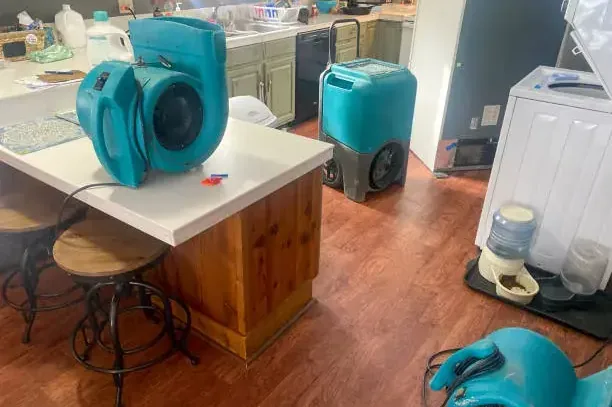
Any recoverable water is removed first. Saturated finishes that cannot remain are documented and selectively opened so hidden construction can release moisture. Air movers then deliver movement across exposed damp surfaces. Dehumidifiers collect the vapor released into the enclosed area. This sequence keeps removable water from becoming an unnecessary indoor humidity burden.
- Map the moisture boundary by material.
- Extract accessible liquid before placing air movers.
- Expose trapped layers only where evidence supports access.
- Record initial temperature and humidity conditions.
- Keep equipment paths clear during operation.
Equipment positions follow material response
Framing, drywall and subfloors do not dry at identical rates. Readings taken at the same marked points reveal which areas improve and which stall. Technicians can redirect airflow, change dehumidification or inspect a concealed edge when the pattern stops moving. Indoor air values describe the chamber, while direct meters show what is happening inside the building components.
The appropriate endpoint comes from a dry reference and the condition of the retained material. A preset number of days cannot replace those comparisons. The drying time estimator illustrates factors that influence planning, but the property record decides when equipment can leave. Every change is tied to observed progress.
Air readings and material readings answer different questions
Both are needed to understand chamber performance and construction recovery.
Closeout values prepare the next repair phase
The final report lists assemblies tested, access points, equipment changes and ending comparisons. Reconstruction can proceed with a clear account of what dried, what was removed and which separate source correction remains.
A chamber may need less airflow after one wall reaches its goal even though the subfloor remains elevated. The crew records that change and repositions equipment toward the unfinished section. At a second checkpoint, the same labeled material is tested again. This staged approach avoids leaving unnecessary machines in a completed area while another layer still needs controlled evaporation.
Marked diagrams keep those adjustments tied to exact locations.
Coverage
Structural Drying across Palmetto, FL
The restoration team serves Palmetto properties near Riveria Dunes, Shadow Brook Mobile Home Park and the Manatee River. Source details and safe entry information help the crew plan the first inspection and extraction work.
See every area servedQuestions
Structural Drying questions in Palmetto
How is equipment quantity chosen?
Technicians consider room volume, exposed wet surface, material type and current indoor conditions. Placement may change as values improve. The goal is balanced evaporation and vapor removal around the affected assembly rather than a fixed machine count.
Why are materials marked for readings?
Marked checkpoints let each visit compare the same locations. That consistency shows whether a wall base, framing member or subfloor is improving and makes equipment adjustments easier to explain in the final documentation.
Can walls dry without being opened?
Some stable assemblies can dry in place when access, water category and readings support that approach. Wet insulation, trapped layers or material that stops responding may require a controlled opening to expose the retained moisture.
What does a dehumidifier do?
As air movement releases moisture from wet surfaces, a dehumidifier removes that vapor from the chamber. Indoor temperature and humidity show chamber performance, while direct material readings confirm whether the construction itself is recovering.
How long does structural drying take?
Material density, hidden layers, initial saturation, access and indoor conditions affect duration. A calendar estimate cannot replace measurements. Equipment remains while useful progress continues and leaves when documented material goals are reached.
What appears in the final drying record?
The file identifies affected assemblies, initial boundaries, equipment positions, access changes, progress values and ending comparisons. It also notes removed finishes and any plumbing, roofing or mechanical correction outside the restoration scope. Completion does not require every material in a building to share one number. The record compares affected components with appropriate dry references and documents the acceptable endpoint chosen for each retained assembly.
24/7 emergency dispatch
Moisture remaining inside building assemblies?
Material checkpoints, balanced equipment and a recorded endpoint create a defensible path toward reconstruction. That evidence supports safe equipment removal and gives reconstruction a clear description of the prepared assemblies.
(888) 621-2041Begin measured drying
Palmetto, FL · Find us on Google