Business water response
Commercial Water Damage in Palmetto, FL
A business loss needs a material map and an operating plan, with each affected zone documented from source control through verified drying. The record must remain understandable even when mitigation moves between occupied and closed areas.
(888) 621-2041Request commercial response- Zone based work
- Contents coordination
- Progress records
First objectiveDefine source and work zones
Access concernOccupants contents and routes
Material checkFloor partitions and storage
Status recordSeparate values by section
Business water does not respect department boundaries. A release can cross carpet seams, partitions and storage areas while only one room shows pooling. Palmetto properties near the Sarasota Branch, Manatee River and Palmetto Elementary School may serve different functions, so the response begins with the actual occupancy, safe routes and construction found on site.
How commercial water damage is handled in Palmetto
- 1
Divide the incident into sections
The first plan marks affected rooms, safe routes, contents and operational priorities.
- 2
Extract by material and access
Crews remove water while protecting exits and documenting transitions into adjoining spaces.
- 3
Control separate drying chambers
Equipment positions reflect partitions, floor types and the activities continuing nearby.
- 4
Report status by zone
Progress values identify completed sections and areas that still require mitigation. An updated zone record explains contents movement, equipment changes and the reason a section remains closed or becomes available.
What does commercial water damage cost in Palmetto, FL?
Commercial water damage work commonly ranges from $2,500 to $18,000 or more. Occupancy, affected area, contents, access and contamination determine the final scope. Specialized equipment may require separate coordination.
One accessible section
$2,500 to $7,600
- Source area extraction
- Basic contents protection
- Zone moisture map
Several business areas
$7,600 to $12,750
- Partition and floor drying
- Operational access planning
- Progress reports by section
Complex occupied loss
$12,750 to $18,000+
- Multiple contained zones
- Extensive contents handling
- Detailed completion records
For a closer planning number, try the water damage cost calculator. A firm figure comes after the walkthrough and moisture map.
The first map combines water and operations
Management identifies critical access, sensitive contents and spaces that can be isolated. Technicians document the source and create work sections around the observed moisture boundary. Extraction starts where it reduces spread without blocking a necessary exit. Dry contents can be moved along a protected route, while affected inventory stays documented before relocation or disposal decisions.
- Keep staff outside wet electrical areas.
- Identify essential rooms and safe entrances.
- Photograph stock and equipment before moving them.
- Mark where water crossed each floor transition.
- Name an onsite contact for access decisions.
Each zone receives its own drying record
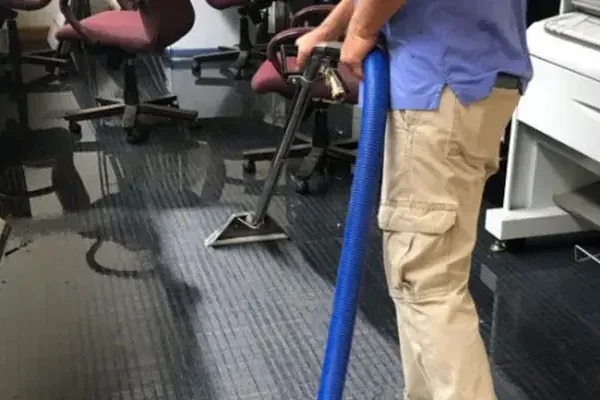
Office carpet, hard flooring, partitions and storage materials release moisture at different rates. Crews extract reachable water, test wall bases and examine floor transitions. Air movers target open wet surfaces without disrupting safe paths. Dehumidifiers control vapor in the enclosed work area. Separate checkpoints make it possible to close one section while another still requires equipment.
A Riveria Dunes commercial space can present public areas beside service rooms, while another building may involve offices and inventory. Neither receives a preset layout. The structural drying process uses repeated material values and indoor conditions to adjust each chamber. Photographs record equipment positions when operational needs require a change.
Operational access belongs in the scope
A useful plan records which routes remain available and which areas stay separated.
Closeout information supports reopening choices
The file lists source findings, water classification, contents handling, access limits, removed finishes and final readings by zone. Business management can then coordinate repair and reopening with a clear account of completed mitigation.
Daily status notes matter when several people coordinate the building. Each section carries its own access condition, material goal and equipment list. If inventory is moved, the original position and destination are recorded. If a doorway reopens, the moisture boundary is checked again. This practical sequence keeps operational changes from erasing the evidence needed for the loss file.
Final photographs also preserve containment edges, protected routes and the condition of retained finishes before repair work begins.
Coverage
Commercial Water Damage across Palmetto, FL
The restoration team serves Palmetto properties near Riveria Dunes, Shadow Brook Mobile Home Park and the Manatee River. Source details and safe entry information help the crew plan the first inspection and extraction work.
See every area servedQuestions
Commercial Water Damage questions in Palmetto
Can part of a business remain open?
That depends on water category, electrical safety, access and the location of affected materials. The work plan can separate documented zones, but property management and relevant authorities determine whether continuing operations are appropriate.
How are contents handled?
Items are photographed in place and separated by condition before movement. Dry contents may be relocated through a protected route. Affected inventory, furnishings and equipment receive individual notes so disposal, cleaning or specialist decisions remain traceable.
Why use several drying zones?
Partitions, floor types and room uses create different moisture loads. Dividing a loss lets technicians adjust equipment for each section, protect occupied routes and document when one area reaches its goal before another.
What records support an insurance claim?
Useful files include source photos, the first material map, water category, extraction details, contents notes, equipment logs and final readings. The insurer decides coverage, while the restoration contractor records observed conditions and performed work.
How is sewage handled in a workplace?
Wastewater areas require immediate separation, protective procedures and controlled porous material removal. Occupants remain outside containment. Cleanable surfaces receive suitable treatment before drying, and the file distinguishes contaminated sections from unaffected business areas.
What affects commercial restoration cost?
Area size, water category, contents, operating restrictions and access hours shape labor and equipment needs. One open room differs from a loss crossing partitions, storage, public space and several floor finishes. Before equipment leaves, each work section receives final material values and a condition note. Management can see which spaces completed mitigation, which finishes were removed and which repairs or specialty services still remain outstanding. The final status note makes those remaining responsibilities visible to everyone coordinating access and repairs.
24/7 emergency dispatch
Business water loss interrupting operations?
Zone based extraction, contents records and measured drying create a clear path from mitigation to repair. A final zone report connects completed mitigation with the access, repair and reopening decisions that follow.
(888) 621-2041Start commercial recovery
Palmetto, FL · Find us on Google