Wood floor moisture care
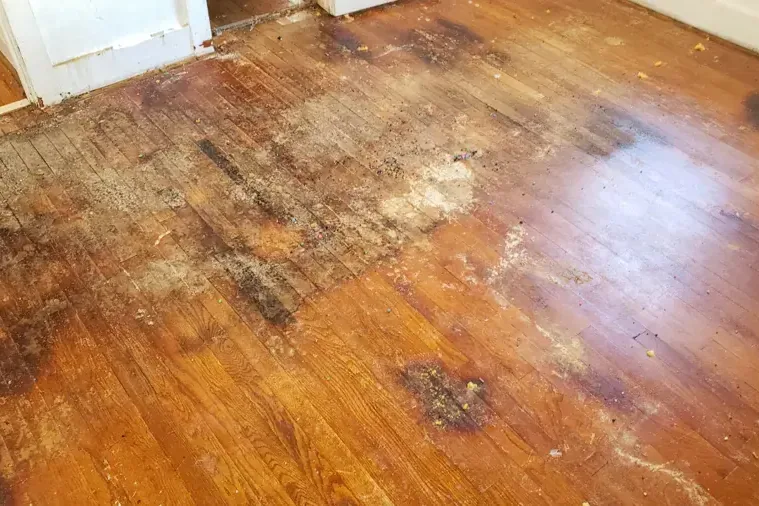
Hardwood Floor Water Damage in Palmetto, FL
Water can remain beneath a finished board after its face looks dry, making repeated readings across the field essential before repair choices. That comparison helps distinguish temporary surface change from moisture still held in lower layers.
(888) 621-2041Request wood floor help- Board field mapping
- Subfloor comparison
- Controlled drying
First taskRemove water above the boards
Reading patternWet field and dry reference
Layers consideredFinish board fastener and subfloor
Decision basisCondition plus measured change
A glossy board face can conceal water at the tongue, fasteners or supporting layer. Floors in Palmetto residences near Riveria Dunes, the Manatee River and Shadow Brook Mobile Home Park do not share one installation. The inspection records board direction, room transitions and accessible subfloor information before equipment is selected.
How hardwood floor water damage is handled in Palmetto
- 1
Map wet and dry sections
A grid of meter points compares affected boards with an appropriate unaffected reference.
- 2
Extract through accessible seams
Surface and edge tools reduce water before controlled evaporation begins.
- 3
Track the supporting layer
Subfloor readings are added where access and construction permit reliable testing.
- 4
Document the flooring endpoint
Repeated values and condition notes support later repair or replacement decisions. Board condition photographs are paired with the reading grid so visual change and material values stay connected.
What does hardwood floor water damage cost in Palmetto, FL?
Hardwood floor water damage work often ranges from $1,100 to $7,800 or more. Floor area, installation, subfloor access and board condition affect the scope. Finish repair remains a separate trade.
Small board section
$1,100 to $3,300
- Surface extraction
- Board field readings
- Dry reference comparison
Room and subfloor
$3,300 to $5,500
- Seam water removal
- Supporting layer checks
- Controlled equipment setup
Several connected areas
$5,500 to $7,800+
- Multiple reading grids
- Longer material monitoring
- Detailed flooring record
For a closer planning number, try the water damage cost calculator. A firm figure comes after the walkthrough and moisture map.
Surface water leaves before forced drying
Extraction tools remove liquid from board faces and seams. Rugs and movable dry contents come away from the affected field, while built-ins remain documented. Technicians mark a series of meter points through the damp area and into a suitable unaffected section. That comparison shows both the extent and the baseline for later visits.
- Stop an accessible indoor source safely.
- Lift loose dry items without crossing wet electricity.
- Do not pry boards or apply household heat.
- Photograph edge changes and room transitions.
- Report water in the room below when present.
Board movement is observed, not guessed
Species, finish, installation and exposure influence how a floor reacts. Cupping or edge darkening matters, but appearance alone cannot establish moisture below the surface. Directed airflow and dehumidification create controlled conditions around retained boards. When access allows, subfloor readings add another layer to the record. Equipment changes follow measured response rather than a fixed schedule.
A doorway may divide two floor systems even when the boards look continuous. Checkpoints on both sides reveal whether water stopped at the transition. The drying time estimator offers planning context, while field readings determine the actual endpoint. Finishes that lose stability receive a separate repair evaluation after the moisture condition is understood.
Fast drying is not always even drying
Controlled conditions let upper and lower layers change without relying on aggressive heat.
The floor record supports the repair decision
Closeout notes identify the source, extraction method, mapped board field, subfloor access and final comparisons. A flooring contractor can then assess sanding, repair or replacement with the moisture history available.
Boards near a wall can respond differently from those at the center of a room because airflow and fastening conditions vary. The reading grid captures that difference instead of reducing the floor to one average number. Notes also identify rugs, cabinets and transitions that limited access, giving the flooring professional a more complete record of the exposure.
Room diagrams preserve board direction and every meter location for later flooring comparisons.
Coverage
Hardwood Floor Water Damage across Palmetto, FL
The restoration team serves Palmetto properties near Riveria Dunes, Shadow Brook Mobile Home Park and the Manatee River. Source details and safe entry information help the crew plan the first inspection and extraction work.
See every area servedQuestions
Hardwood Floor Water Damage questions in Palmetto
Can wet hardwood stay in place?
Sometimes. Water category, board condition, installation and measured response all matter. Stable boards exposed to suitable water may remain during controlled drying, while contaminated, separated or structurally failed material requires a different decision.
Why compare with a dry section?
Wood moisture varies naturally. An unaffected area of similar material provides a useful reference for the property. Repeat readings across both sections show whether the affected field is moving toward an appropriate documented endpoint.
Does cupping mean the floor is ruined?
Cupping shows an imbalance, but it does not decide the repair alone. Technicians record its location and measure the boards and accessible subfloor. A flooring professional evaluates finish and repair options after moisture stabilizes.
Should a heater be aimed at wet boards?
No. Uncontrolled heat can dry the face unevenly while lower layers remain wet. Restoration equipment manages airflow and humidity across the field, and repeated readings show whether the floor and supporting layer respond together.
How is water removed from seams?
Surface and detail extraction tools reduce liquid above and between accessible boards. The method depends on construction and finish condition. Extraction occurs before evaporation so equipment is not asked to handle water that can be physically removed.
What changes the restoration cost?
Affected floor area, board construction, water category, access beneath the floor and response time shape the work. A small clean spill differs from moisture crossing several rooms or reaching an enclosed subfloor. A floor may continue changing after surface water disappears, which is why measurement dates matter. The closeout packet preserves those comparisons and identifies the exact board field prepared for a flooring specialist to assess.
24/7 emergency dispatch
Water held beneath a wood floor?
Mapped board values and subfloor checks support a careful drying plan and a defensible repair decision. The moisture history gives the flooring specialist clearer evidence for finish repair, board replacement or retention.
(888) 621-2041Start floor assessment
Palmetto, FL · Find us on Google