Standing water response
Emergency Water Extraction in Lakewood Ranch, FL
Standing water is removed in stages, then flooring, wall bases and cabinets are measured so hidden moisture receives a documented drying plan. The plan changes as each mapped section responds to removal and dehumidification.
(888) 621-2041Request Emergency Water Extraction help- Rapid water removal
- Mapped wet areas
- Recorded drying checks
First priorityRemove accessible standing water
Survey areaFloors, walls and cabinets
Local contextVaried homes and commercial spaces
Completion recordFinal material readings
Standing water behaves differently in a Summerfield house than in a condominium near Waterside or a business reached from State Road 64. Room dimensions, floor coverings and cabinet layouts change the route available to the water. An extraction visit begins with a walk through of the affected spaces, a source check and a moisture survey extending beyond the obvious puddle. Those observations establish where removal can begin safely and which belongings should move first.
How emergency water extraction is handled in Lakewood Ranch
- 1
Map the entire wet edge
Meters test flooring, wall bases and cabinet materials beyond the visible pool before removal starts.
- 2
Extract in workable stages
Open areas are cleared first, followed by carpet edges, seams and tight spaces beside fixed finishes.
- 3
Set a measured dry out
Air movement and dehumidification are arranged around the materials that still show elevated readings.
- 4
Verify the final condition
Recorded values are compared with an unaffected reference before equipment is released from the property. These steps keep extraction tied to the mapped wet area.
What does emergency water extraction cost in Lakewood Ranch, FL?
Emergency extraction usually ranges from $900 to $6,500 or more. Water category, room count, flooring layers, cabinet involvement and concealed spread determine the final scope.
Accessible wet area
$900 to $2,750
- Open floor extraction
- Wall edge measurements
- Basic drying records
Connected material spread
$2,750 to $4,600
- Carpet detail removal
- Cabinet base checks
- Multiple equipment positions
Broad concealed loss
$4,600 to $6,500+
- Several drying zones
- Selective finish access
- Extended material monitoring
For a closer planning number, try the water damage cost calculator. A firm figure comes after the walkthrough and moisture map.
Extraction follows the wet footprint
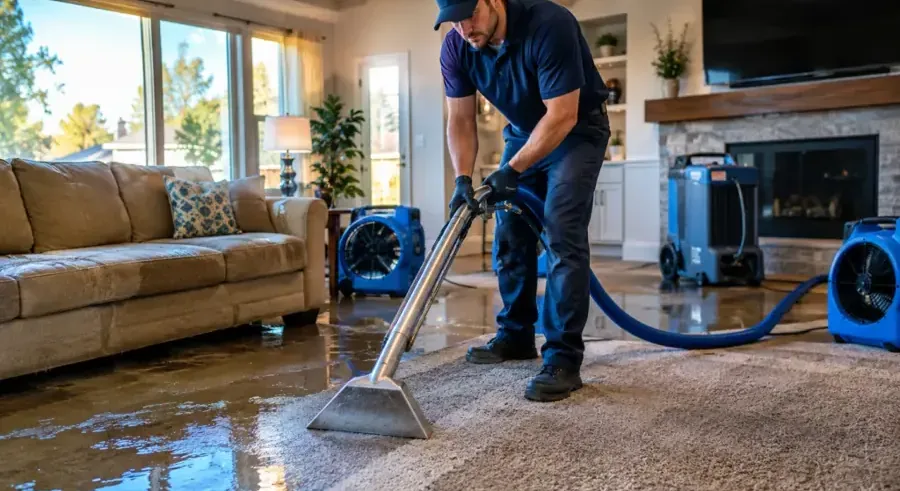
Visible water is removed before air movers are asked to handle evaporation. Technicians may use a weighted tool on carpet, a wand along edges or a different attachment beside fixed cabinetry. The choice depends on access and on the material underfoot. Baseboards, wall bottoms and toe kicks receive meter checks because a shallow pool can feed moisture into them without leaving a broad stain. The Braden River setting is a useful reminder that outdoor conditions matter, but the indoor release and its category still govern the cleanup plan.
- Electrical hazards and unstable finishes are identified before equipment enters.
- Dry contents are shifted beyond the measured boundary.
- Water is pulled from open flooring before detailed edge work.
- Cabinets and adjoining rooms are checked for concealed spread.
- Initial photographs preserve conditions for the claim file.
Drying begins after bulk removal
Extraction removes bulk water so drying equipment can address moisture retained within floors and walls. The crew records readings in affected flooring, wall bases and cabinet materials, then compares them with a dry part of the same property. Airflow is placed where it can cross wet surfaces. Dehumidification collects vapor from the room. Equipment positions change when one area improves faster than another or a closed edge continues to hold moisture.
Daily records show whether the planned movement is occurring. A flat reading may lead to a closer cavity check, a change in airflow or controlled removal of a material that cannot dry in place. The final decision relies on measurements rather than appearance. For planning beyond the first visit, the drying time estimator explains how access, material type and saturation can affect a monitored schedule.
Water removal and drying are separate decisions
A floor can look clear after extraction while padding, wallboard or cabinet bases remain damp. Both phases need their own documented result.
Records support the next repair decision
The completed file connects the release point, initial wet map, extraction work and final readings. It can also identify any material removed because contamination or physical damage made drying unsuitable. That sequence helps an owner discuss repairs and coverage without relying on a visual estimate alone.
Coverage
Emergency Water Extraction across Lakewood Ranch, FL
The restoration team serves Lakewood Ranch homes, villas, condominiums and business properties. Reports of wet ceilings, appliance leaks, standing water or sewage help the crew prepare the first inspection and choose equipment for the affected rooms.
See every area servedQuestions
Emergency Water Extraction questions in Lakewood Ranch
Is removing the visible water enough?
No. Extraction clears recoverable water, but porous flooring, wallboard and cabinet materials may still hold moisture. A complete response maps those materials, establishes dry reference readings and monitors the change before equipment is removed.
What should happen before the crew arrives?
Occupants should avoid wet electrical components and unstable finishes. If the source has a safe dry control, it may be stopped. Photos of rooms and belongings should be taken before items are moved or water is disturbed.
How does a technician find water under flooring?
A survey begins at the release point and continues past the visible boundary. Moisture meters confirm conditions in the floor and nearby wall bases. Thermal patterns can help direct the survey, but material readings make the final determination.
Can carpet remain after a clean water release?
Condition, water category, backing, padding and time exposed all matter. Carpet that is physically sound may be extracted and monitored. Contaminated materials or components that separate, stain permanently or fail to improve can require controlled removal.
Why are readings taken more than once?
A single number shows one moment. Repeated values show whether extraction, airflow and dehumidification are reducing moisture as planned. The comparison also reveals a stalled area that needs different access or an adjustment to the equipment arrangement.
What affects the extraction price?
The total reflects the water category, affected floor area, number of rooms, material access and concealed spread. Cabinet bases, wall cavities, saturated padding and contaminated materials can add labor beyond a small open area with accessible clean water. The final choice follows the measured condition onsite.
24/7 emergency dispatch
Emergency Water Extraction for Lakewood Ranch, available 24/7
Removing pooled water starts the recovery. Mapped drying and repeated measurements then establish which floors, wall edges and cabinet materials are ready for repair and coverage discussions.
(888) 621-2041Start Emergency Water Extraction care
Lakewood Ranch, FL · Find us on Google