Concealed floor moisture
Slab Leak Water Damage in Lakewood Ranch, FL
A suspected supply leak beneath the floor is mapped across finishes and lower walls before access, drying and repair decisions are made. Comparison readings establish the actual affected perimeter.
(888) 621-2041Request Slab escape help- Floor moisture mapping
- Evidence based access
- Measured slab drying
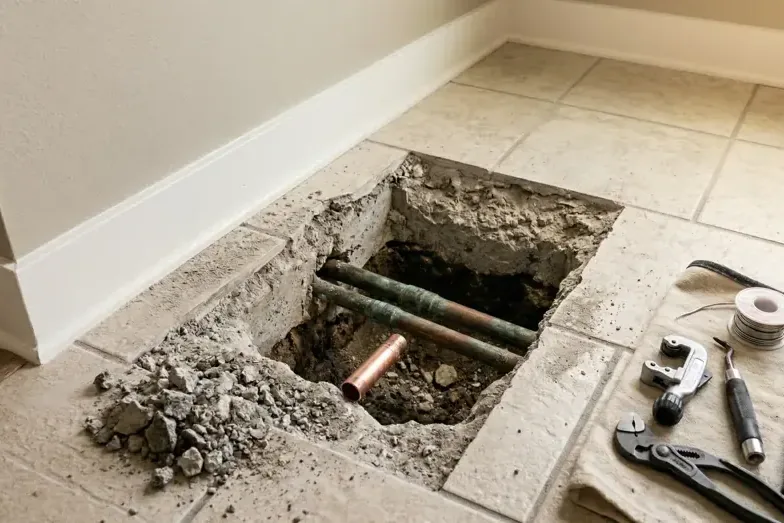
Suspected sourceConcealed supply beneath the floor
Mapping cluesFloor readings, wall bases and supply behavior
Access decisionEvidence before opening finishes
Drying targetStable floor and lower wall materials
A concealed supply leak can reveal itself through a warm floor area, damp trim or an unexplained change in water use, yet none of those clues establishes the full wet boundary. Housing varies from Calusa Country Club condominiums to Waterbury Park single family homes and Windward villas. The response therefore starts with property specific readings. A leak detection trade locates and repairs the plumbing failure, while restoration technicians map the materials affected above and beside it.
How slab leak water damage is handled in Lakewood Ranch
- 1
Build a comparison map
Readings across the floor and lower walls are compared with unaffected material in the property.
- 2
Coordinate source location
Plumbing diagnosis identifies the failed supply while restoration mapping defines the wet construction separately.
- 3
Select evidence based access
Openings are limited to points needed for repair, inspection or drying of concealed layers.
- 4
Follow the floor response
Repeated measurements show whether retained finishes and underlying materials are reaching the drying target. The record preserves every marked location for comparison.
What does slab leak water damage cost in Lakewood Ranch, FL?
Slab leak restoration commonly ranges from $1,200 to $7,500 or more. Wet floor coverings, wall involvement and access beneath finishes shape restoration costs. Plumbing repair coordination also affects the sequence of work.
Localized floor area
$1,200 to $3,300
- Comparison moisture grid
- Accessible edge drying
- Plumbing scope coordination
Several connected finishes
$3,300 to $5,350
- Floor layer assessment
- Lower wall measurements
- Selective access planning
Wide concealed pathway
$5,350 to $7,500+
- Multiple room mapping
- Complex finish access
- Longer monitored drying
For a closer planning number, try the water damage cost calculator. A firm figure comes after the walkthrough and moisture map.
The survey avoids guessing at the opening point
Occupants should report where the first symptom appeared and avoid lifting flooring without a plan. Technicians compare readings across the suspected area, nearby wall bases, cabinets and adjoining rooms. A dry portion of the same material provides context. Supply control may be coordinated with the responsible utility or plumbing contractor, but a provider is not assumed for every property because the community extends across county boundaries.
- Note warm areas, damp trim and changes in floor appearance.
- Use a safe known shutoff only when active flow is suspected.
- Photograph finishes before moving rugs or furnishings.
- Do not cut flooring solely from the first visible symptom.
- Report dampness on both sides of nearby partitions.
Leak repair and material recovery are different tasks
Plumbing access is chosen to correct the failed supply, while restoration access is chosen to expose and dry affected construction. Those openings may not be identical. Tile, underlayment, wood flooring and lower wallboard respond differently to moisture. Stable clean water affected materials may remain when measurements improve. Swollen composite products may need removal when they lose strength. Opening an enclosed floor edge can also give technicians access to trapped water.
After source repair and extraction, the crew arranges dehumidification and airflow for the mapped footprint. Enclosed edges receive continued readings because the surface can improve before the layer below. Equipment positions change when progress stalls. The water extraction service explains removal when water is accessible, while slab related drying often depends more heavily on edge and floor layer measurements.
The first damp spot may not sit above the failure
Water can move between the slab and finished floor before reaching a visible edge. Mapping precedes repair planning.
Closing records connect the plumbing and drying work
The file notes the suspected route, initial floor map, access decisions, repaired source and material readings through completion. It gives repair contractors a clear basis for replacing only finishes that were opened or physically damaged.
Coverage
Slab Leak Water Damage across Lakewood Ranch, FL
The restoration team serves Lakewood Ranch homes, villas, condominiums and business properties. Reports of wet ceilings, appliance leaks, standing water or sewage help the crew prepare the first inspection and choose equipment for the affected rooms.
See every area servedQuestions
Slab Leak Water Damage questions in Lakewood Ranch
Does a warm floor prove there is a slab leak?
A warm area can be a clue, but it does not confirm the cause or exact location. Plumbing diagnosis and a broader moisture survey are needed before any finish is opened or a restoration scope is selected.
Why can dampness appear away from the pipe failure?
Water may travel along the slab surface, beneath flooring or toward a wall edge before becoming visible. Mapping across several materials shows the affected route rather than treating the first stain as the source.
Who repairs the pipe below the floor?
A qualified plumbing trade locates and corrects the failed supply. Restoration work addresses extraction, material evaluation, drying and documentation. Coordinating the two scopes helps avoid opening a finish twice or covering retained moisture.
Must tile or wood flooring be removed?
Not in every case. Retention depends on physical condition, water category, access and measured improvement. Loose tile, swollen wood products or concealed layers that cannot be evaluated may require selective removal based on onsite evidence.
How is the floor monitored during drying?
Technicians record readings at marked points across the wet field, perimeter and unaffected reference area. The pattern is reviewed over time. Stalled locations may need different airflow, dehumidification or controlled access.
What affects slab leak restoration cost?
The mapped area, floor covering, lower wall involvement, repair access and concealed spread shape the scope. A reachable edge with stable finishes differs from a release beneath several connected rooms and built in materials. Local floor construction and access conditions are evaluated separately before the final drying method is chosen. The closing record preserves that map so flooring and wall repairs address the measured area rather than assumptions.
24/7 emergency dispatch
Slab Leak Water Damage for Lakewood Ranch, available 24/7
Concealed water needs a visible record: the initial floor map, repair access and ending material readings. These establish the condition of flooring and adjoining wall finishes before restoration.
(888) 621-2041Start Slab escape care
Lakewood Ranch, FL · Find us on Google