Tank and connection failures
Water Heater Leak Cleanup in Bayshore Gardens, FL
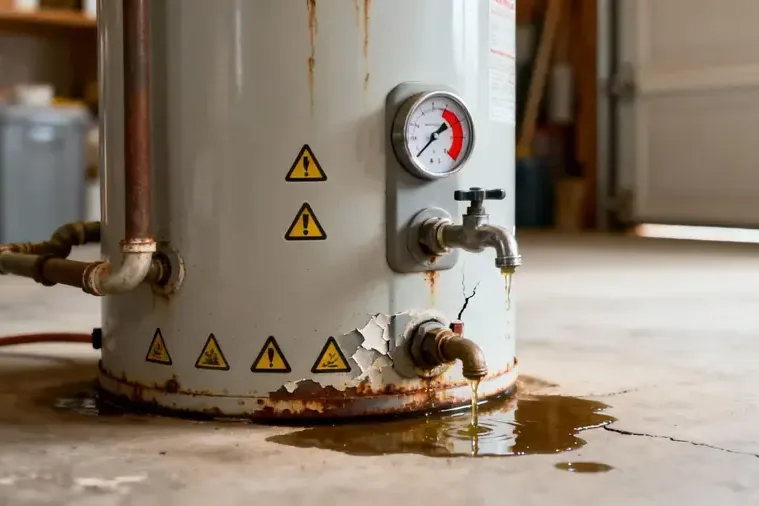
A failed tank, valve or connector can release water across a garage or utility room and into finished space. Cleanup follows safe shutdown, extraction and detailed perimeter readings.
(888) 621-2041Request water heater cleanup- Tank-area extraction
- Adjacent room checks
- Recorded finish readings
Common originsTank, valve or connector
Immediate concernHot water and utilities
Spread pointsWall bases and adjoining floors
Mitigation finishDocumented material endpoint
A water heater does not need to empty completely to damage nearby construction. A slow connector leak can wet a wall base over time, while a tank failure can send a larger volume through a doorway before anyone finds it. In Bayshore Gardens homes, the crew checks the equipment area and follows the floor slope into every connected finished room.
How water heater leak cleanup is handled in Bayshore Gardens
- 1
Make the area ready
Source isolation and utility safety are coordinated before extraction begins around the failed equipment. Utility shutoff conditions enter the first record.
- 2
Follow the floor route
Technicians remove accessible water and check thresholds, baseboards, cabinets and nearby room finishes. The survey continues beyond the visible appliance footprint.
- 3
Dry each assembly separately
Air movement and dehumidification are adjusted for garage surfaces, walls and interior floor layers. Equipment stays clear of plumbing replacement access.
- 4
Close with measured evidence
Repeated readings show whether retained materials reached goal or still require better access.
What does water heater leak cleanup cost in Bayshore Gardens, FL?
Water heater leak cleanup commonly ranges from $850 to $5,500 or more. Released volume, tank location, nearby finishes, cabinet contact and hidden travel determine the completed mitigation scope.
Contained utility-area leak
$850 to $2,400
- Accessible floor extraction
- Local wall-base checks
- Initial condition record
Water into finished space
$2,400 to $3,900
- Threshold moisture mapping
- Wall and floor drying
- Equipment progress checks
Several concealed sections
$3,900 to $5,500+
- Cabinet or cavity access
- Multiple room treatment
- Extended measurement file
For a closer planning number, try the water damage cost calculator. A firm figure comes after the walkthrough and moisture map.
Utilities and temperature make source control a careful task
Occupants should not step through water to reach electricity, gas controls or the appliance. A familiar cold-water valve may be closed only from a safe, dry position. The appropriate plumbing professional handles repair or replacement. Restoration personnel photograph the tank area and begin with any accessible released water once the environment is ready for mitigation.
- Avoid contact with hot water and wet utility controls.
- Do not move a failed tank without professional help.
- Photograph the base, pan and visible connections.
- Check nearby closets and rooms for damp edges.
- Retain repair records with the mitigation file.
The water path often continues beyond the appliance footprint
Extraction starts on open surfaces, then moves to floor joints, wall bottoms and nearby thresholds. If the unit sits beside cabinets or a finished partition, meters test those materials at several heights. A garage surface and an interior floor can hold or release moisture differently, so each section receives an individual reading plan.
Properties near South Bradenton, Whitfield and Bayshore Gardens Parkway vary in layout. One tank may stand in a garage, another in a utility closet. The team does not infer spread from placement alone. Thermal patterns help find possible routes, and direct measurements confirm whether drywall, trim, subfloor or cabinet components are elevated.
Drying protects the transition into occupied space
After liquid extraction, air movers and dehumidifiers address retained moisture where material condition allows. Equipment positions account for the narrow area around plumbing and the doorway into living space. Marked values are collected again during monitoring. If a closed wall base fails to improve, access and finish condition are reassessed before the plan continues.
Replacement of the tank solves only the source
The floor, wall and cabinet materials around the appliance still require their own drying or removal decision after installation work.
Records connect appliance failure with room recovery
Near Sarasota Bay, Bowlees Creek and the Bayshore Gardens Shopping Center, the closing file can identify the failure area, extracted sections, affected finishes, equipment changes and final comparisons. This separates tank replacement from mitigation and gives later repair work a clear starting point.
When a replacement unit is installed, clear working access should remain around marked monitoring points. New equipment can obscure a wall base or floor seam that still needs readings. Coordination prevents installation work from closing the restoration survey too early.
Coverage
Water Heater Leak Cleanup across Bayshore Gardens, FL
Service includes Bayshore Gardens homes near Sarasota Bay and Bowlees Creek, along with properties toward South Bradenton and Whitfield. Dispatch needs details about the active source, wet rooms and any unsafe access.
See every area servedQuestions
Water Heater Leak Cleanup questions in Bayshore Gardens
What should happen when a water heater is actively leaking?
People should avoid hot water and wet utility controls. A familiar cold-water valve may be closed only from a dry, safe position. A plumbing professional addresses the failed equipment, while the restoration crew handles released water and affected materials. Installation access should not cover marked areas that still require monitoring.
How far can tank water spread?
Water may follow floor slope, cross a threshold or enter a nearby wall and cabinet base. The visible puddle is not the full survey boundary. Readings continue into connected materials until values return to an appropriate comparison area.
Can a garage floor simply air dry after the tank is replaced?
The open surface may clear while drywall, trim or an adjoining interior floor remains wet. Direct measurements show which materials need active drying. The answer depends on the room layout, material layers and how long water remained.
Who moves or replaces the damaged water heater?
A qualified plumbing professional manages repair or replacement of the appliance and connections. Restoration work is separate. It documents the release, extracts water, evaluates building materials and confirms the endpoint for retained walls, cabinets and floors.
What documentation is useful for a claim assessment?
Photographs of the failed area, the initial water boundary, plumbing findings, moisture readings and an itemized mitigation scope create a useful sequence. The insurer separately determines whether the cause and resulting damage fall within policy terms.
What affects water heater cleanup pricing?
Tank location, released amount, access, wall contact and spread into finished rooms all matter. A small leak on an open utility floor differs from a full tank release entering cabinets, flooring layers and several enclosed lower-wall sections.
24/7 emergency dispatch
Water Heater Leak Cleanup for Bayshore Gardens
Extraction around the appliance, connected-room measurements and a documented endpoint prepare utility and finished areas for repair after the source is corrected. The final record separates appliance work from material recovery.
(888) 621-2041Request Water Heater Leak Cleanup
Bayshore Gardens, FL · Find us on Google