Board and subfloor readings
Hardwood Floor Water Damage in Bayshore Gardens, FL
Water can collect at board edges, fasteners and the subfloor before major surface change appears. A reference-based survey directs extraction, drying and repair decisions for each section.
(888) 621-2041Request a wood floor survey- Board moisture mapping
- Seam extraction
- Dry reference comparison
Survey patternBoard-by-board grid
Hidden layerSubfloor beneath boards
Early methodExtraction along seams
Decision basisCondition plus moisture movement
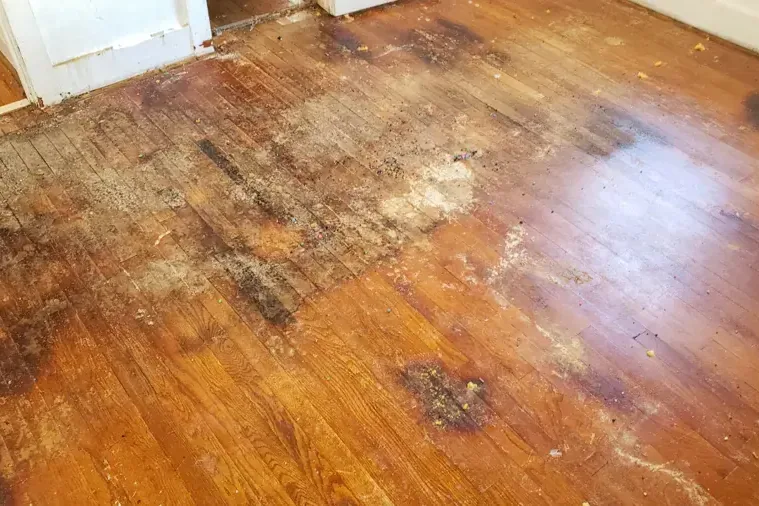
Wood flooring can look only slightly dull while moisture concentrates along tongues, grooves and fasteners. In Bayshore Gardens, a planned mid-century home may have a different floor assembly from a later waterfront property or remodeled room. Technicians establish a reading grid across affected and unaffected boards before deciding whether a drying attempt is appropriate.
How hardwood floor water damage is handled in Bayshore Gardens
- 1
Lay out a reading grid
Affected boards and a suitable dry reference are marked for repeat comparison. The grid extends beyond visible board changes.
- 2
Extract reachable water
Surface tools and seam attention reduce liquid held around board edges and transitions. Dry furnishings remain off the mapped wet section.
- 3
Check the supporting layer
Subfloor, baseboards and adjacent walls are tested to define the full assembly. Their values are recorded as different material layers.
- 4
Track physical and moisture change
Readings and board condition direct retention, access and later repair decisions.
What does hardwood floor water damage cost in Bayshore Gardens, FL?
Hardwood floor water damage work commonly ranges from $1,100 to $7,800 or more. Floor area, subfloor moisture, water category, board condition and access determine the completed scope.
Localized board exposure
$1,100 to $3,300
- Focused reading grid
- Surface and seam extraction
- Short monitoring plan
Boards and subfloor affected
$3,300 to $5,500
- Expanded moisture survey
- Controlled floor drying
- Transition checks
Extensive floor impact
$5,500 to $7,800+
- Several connected rooms
- Selective board access
- Longer condition tracking
For a closer planning number, try the water damage cost calculator. A firm figure comes after the walkthrough and moisture map.
The wet boundary follows boards, not room labels
Extraction works across the surface and at accessible seams after the source is stopped. Readings continue past the visible mark because water can move beneath several courses. Baseboards, transitions and the subfloor receive separate checks. A suitable dry section supplies the comparison needed to interpret the values.
- Stop foot traffic across lifted or cupped boards.
- Do not cover the area with rugs or plastic.
- Photograph board changes and the source location.
- Move furniture without dragging it over wet wood.
- Avoid sanding before moisture conditions are resolved.
Controlled drying avoids abrupt surface treatment
Air movement and dehumidification are balanced around the finish and construction. Some assemblies support specialized drying access, while others need selective removal when water is trapped or the boards have failed physically. Monitoring uses the same marked grid so changes are visible across time instead of relying on touch.
Near South Bradenton, Whitfield and Bayshore Gardens Parkway, the source may be an appliance, pipe or storm opening. Category and duration affect retention decisions. A clean, recent release differs from contaminated water or prolonged saturation, even when the wood species appears similar.
Flat appearance is not a moisture endpoint
Boards and subfloor must reach supported comparison values before sanding, refinishing or replacement planning proceeds.
The grid supports repair choices
Properties near Sarasota Bay, Bowlees Creek and the State College of Florida campus receive a closing record of affected courses, subfloor readings, equipment changes and physical damage. That evidence helps determine which areas are ready to retain and which need finish repair.
Furniture legs and area rugs can create isolated slow-drying spots, so the survey records where they stood. After safe contents movement, those locations are compared with open boards. The additional pattern helps distinguish source travel from moisture temporarily trapped beneath an object.
Seasonal room conditions can affect an unaffected wood reference, so the crew records indoor temperature and humidity alongside board values. Those environmental notes help explain normal movement without treating every small reading change as new water damage.
Coverage
Hardwood Floor Water Damage across Bayshore Gardens, FL
Service includes Bayshore Gardens homes near Sarasota Bay and Bowlees Creek, along with properties toward South Bradenton and Whitfield. Dispatch needs details about the active source, wet rooms and any unsafe access.
See every area servedQuestions
Hardwood Floor Water Damage questions in Bayshore Gardens
Can cupped hardwood flatten after drying?
Some boards may change as moisture leaves, but outcome depends on severity, duration, construction and physical damage. Drying should be measured before sanding or replacement decisions. No visual change alone proves that a board will recover. Any sanding decision should follow the final stabilization record and flooring assessment.
Why take readings in a grid?
A grid shows how moisture varies across courses and whether the affected perimeter is shrinking. Returning to the same points gives a meaningful trend. Random readings make it harder to evaluate equipment changes or compare boards with a dry section.
Does the subfloor matter if the boards look dry?
Yes. Moisture beneath the finish can remain elevated and later affect retained flooring. Subfloor access and meter type depend on the assembly. The dry target considers both visible boards and the supporting layer where it can be assessed.
Should wet hardwood be sanded right away?
No. Sanding before the assembly stabilizes can create an uneven final result and conceal continuing movement. Moisture values and board condition should first reach a documented point suitable for the flooring or repair professional's next decision.
Can contaminated wood flooring remain?
Water category changes the evaluation. Sewage or outdoor floodwater can enter joints and porous wood components that are difficult to clean. Material exposure, access and condition determine whether controlled removal is more appropriate than a drying attempt.
What affects wood floor mitigation cost?
Affected area, floor construction, board condition, subfloor involvement and source category all influence the work. A few accessible boards from clean water differ from several rooms with trapped moisture, visible deformation or contaminated contact. Monitoring frequency also matters.
24/7 emergency dispatch
Hardwood Floor Water Damage help in Bayshore Gardens
A marked board grid and subfloor readings show how the assembly responds before refinishing, selective repair or replacement begins. Physical changes remain part of the decision record.
(888) 621-2041Request Hardwood Floor Water Damage help
Bayshore Gardens, FL · Find us on Google