Measured water removal
Emergency Water Extraction in Bayshore Gardens, FL
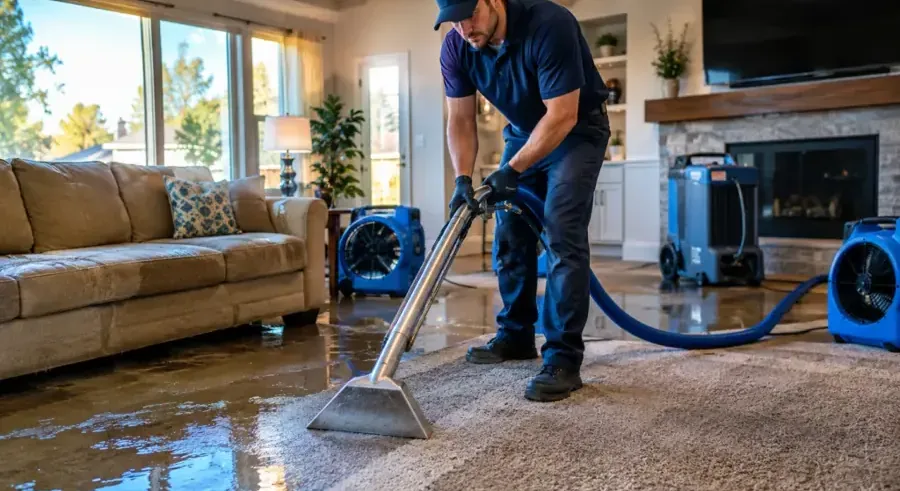
Pooling from plumbing, appliances or storms can cross flooring seams before the full route is visible. Extraction crews reduce the volume, inspect adjoining materials and establish a monitored drying boundary.
(888) 621-2041Request emergency extraction help- Standing water removal
- Hidden edge checks
- Recorded drying values
First objectiveReduce standing water
Survey areaFloors, wall bases and cabinets
Local contextPlanned homes near bay and creek
Completion proofStable comparative readings
A puddle in a Bayshore Gardens room does not reveal everything the release reached. Water can move below flooring edges, through cabinet toe spaces and into lower wallboard while the center of the floor is being cleared. Near South Bradenton, Sarasota Bay and Bayshore Gardens Parkway, the extraction crew begins with hazards, source conditions and a measured perimeter. That sequence distinguishes open water from moisture already held by construction.
How emergency water extraction is handled in Bayshore Gardens
- 1
Establish the wet perimeter
Meters extend the inspection from open pooling into connected flooring, walls and cabinet bases. The visible edge is treated as a starting point.
- 2
Recover accessible liquid
Pumps and detail attachments remove volume from broad surfaces, seams and reachable confined areas. Each attachment is recorded with its target area.
- 3
Arrange active drying
Air movement and dehumidification are balanced around material type, access and measured moisture load. A dry reference supports interpretation of those values.
- 4
Compare marked locations
Consistent readings document progress until retained materials reach an appropriate dry reference.
What does emergency water extraction cost in Bayshore Gardens, FL?
Emergency extraction commonly ranges from $900 to $6,500 or more. Water category, affected rooms, floor layers, cabinet involvement and concealed travel determine where the final scope falls within that range.
Accessible surface water
$900 to $2,750
- Open-floor extraction
- Threshold moisture checks
- Initial condition photos
Water across assemblies
$2,750 to $4,600
- Carpet edge treatment
- Cabinet base readings
- Several equipment zones
Extensive concealed spread
$4,600 to $6,500+
- Multiple mapped rooms
- Selective finish access
- Longer material tracking
For a closer planning number, try the water damage cost calculator. A firm figure comes after the walkthrough and moisture map.
Liquid removal comes before environmental drying
Pumps and weighted extraction tools take out water that can be physically recovered. The appropriate attachment depends on carpet, hard flooring, tight edges and accessible cabinet spaces. Starting with bulk water reduces the amount that later equipment must evaporate. Dry belongings remain outside the marked boundary, while photographs preserve the original water edge and room condition before contents are shifted.
- Avoid areas containing wet electrical devices or sagging finishes.
- Use a familiar shutoff only from a dry approach.
- Photograph the source and visible route before moving items.
- Keep unaffected contents beyond the mapped work zone.
- Report every room where dampness or staining appeared.
Surface removal is not the final drying test
After pooling is gone, direct meters check floor layers, baseboards, wall bottoms and built-in cabinets. Air movers direct evaporation across exposed damp surfaces. Dehumidifiers collect the moisture released into the controlled space. Equipment locations can change when one assembly improves quickly and another holds elevated readings along an enclosed joint.
Monitoring returns to marked points so the crew can compare like with like. A suitable dry area in the same property supplies a reference for retained materials. When progress slows, access, airflow and material condition are assessed instead of extending equipment time without explanation. The drying time estimator outlines variables that influence a schedule, while onsite readings establish the actual endpoint.
Extraction and verification solve separate problems
Extraction removes available liquid. Repeated measurements show whether water still held in floors, walls or cabinets is leaving at a useful rate.
A closing record prepares the rooms for repair
The final file identifies the source, rooms surveyed, extraction methods, equipment changes and ending values. It also lists finishes retained or removed because of contamination or physical failure. Owners near Bowlees Creek, Whitfield and State College of Florida can use that factual sequence when discussing repairs and policy assessment.
Before equipment leaves, the crew also checks nearby transitions that may have escaped the first survey. A newly elevated point is added to the map and investigated rather than hidden inside an average room reading.
Coverage
Emergency Water Extraction across Bayshore Gardens, FL
Service includes Bayshore Gardens homes near Sarasota Bay and Bowlees Creek, along with properties toward South Bradenton and Whitfield. Dispatch needs details about the active source, wet rooms and any unsafe access.
See every area servedQuestions
Emergency Water Extraction questions in Bayshore Gardens
Why map moisture after the visible puddle is removed?
Liquid can remain below flooring, behind wall bases and under fixed cabinets after the open surface looks clear. Direct readings locate those damp layers and create a baseline. Later values reveal whether the chosen drying arrangement is changing the material.
What can occupants do before extraction starts?
People should stay away from wet electrical components and unstable finishes. An accessible source may be stopped only from a safe, dry position. Photographs preserve room conditions before unaffected belongings are moved beyond the water path.
How does a crew extract water from tight edges?
Broad surfaces are addressed first, followed by attachments suited to carpet borders, floor joints and reachable cabinet spaces. Meter results direct the detailed work. A closed layer may need controlled access if its values remain elevated.
Can carpet remain after an indoor release?
Retention depends on water category, backing condition, pad saturation, contamination and measured response. Sound carpet affected by clean water may be extracted and monitored. Separated, contaminated or physically failed material calls for another handling decision.
Why might equipment positions change during drying?
Rooms rarely dry at one uniform pace. If a wall section improves more slowly than an open floor, airflow can be redirected or access reconsidered. Adjustments keep the drying effort focused on the materials that still need it.
What determines the price of emergency extraction?
Category, affected area, flooring construction, fixed cabinets and concealed spread all matter. A single open room differs from water that crossed thresholds or entered closed assemblies. The estimate should connect each charge with the measured conditions and planned work.
24/7 emergency dispatch
Emergency Water Extraction for Bayshore Gardens, available 24/7
Prompt volume removal creates the right starting point for material drying. Mapping, equipment adjustments and final comparative readings prepare affected rooms for informed repair decisions.
(888) 621-2041Start Emergency Water Extraction care
Bayshore Gardens, FL · Find us on Google