Measured water removal
Emergency Water Extraction in Ellenton, FL
Extraction begins with hazard checks and a mapped wet boundary, then moves from open pooling toward floor seams, cabinets and lower wall materials. Pumps and detail tools reduce the volume before material-focused drying begins.
(888) 621-2041Request Emergency Water Extraction help- Open water removal
- Hidden edge mapping
- Documented dry values
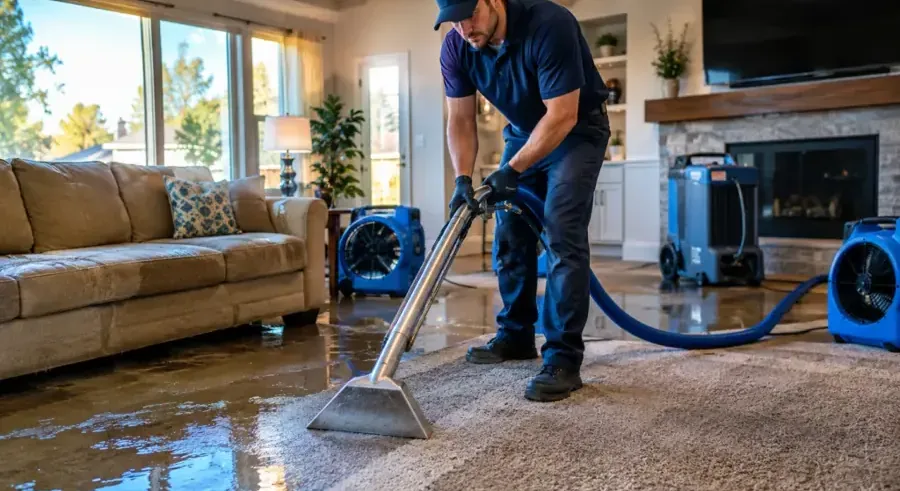
Opening taskRemove pooled water safely
Survey pointsFloors, lower walls and cabinets
Local settingHomes near river and highway corridors
Recorded finishStable material moisture values
Water standing across a room is only the portion that can be seen. In Ellenton properties around U.S. Route 301, the Manatee River and the boundary with Palmetto, liquid may continue under thresholds, behind baseboards or beneath fixed cabinets. The extraction crew first checks electrical and structural hazards, identifies the source and marks every space where readings indicate spread. That map determines how removal progresses from open flooring into less accessible edges.
How emergency water extraction is handled in Ellenton
- 1
Define the removal boundary
Meters extend the survey beyond visible pooling into lower walls, flooring layers and cabinet bases.
- 2
Extract open areas first
Appropriate tools remove recoverable water before detailed attention moves to seams and confined edges.
- 3
Arrange a responsive dry out
Air movers and dehumidifiers are placed according to material, access and measured moisture load.
- 4
Close with comparison readings
Marked locations are tracked until retained materials align with suitable dry areas in the property.
What does emergency water extraction cost in Ellenton, FL?
Emergency extraction commonly ranges from $900 to $6,500 or more. Category, affected rooms, finish layers, cabinet involvement and hidden spread determine the final work. Water category and trapped-section access also affect the scope.
Directly accessible water
$900 to $2,750
- Open surface removal
- Threshold moisture checks
- Initial room photographs
Water across assemblies
$2,750 to $4,600
- Carpet edge extraction
- Cabinet base readings
- Several equipment areas
Extensive hidden spread
$4,600 to $6,500+
- Multiple mapped rooms
- Selective finish access
- Longer moisture tracking
For a closer planning number, try the water damage cost calculator. A firm figure comes after the walkthrough and moisture map.
Bulk water leaves before evaporation carries the load
Large accessible areas are extracted first so remaining equipment does not waste time on water that pumps can remove. Carpet, hard flooring, joints and cabinet toe kicks call for different attachments. Technicians work toward the mapped perimeter while keeping dry contents outside the affected route. Photos taken before movement preserve the initial water height, furniture positions and finish condition for the job record.
- Stay outside rooms containing wet wiring or unstable finishes.
- Use a safe shutoff only when the path remains dry.
- Photograph the source area before contents are relocated.
- Keep dry belongings beyond the marked moisture boundary.
- List every room where dampness or staining appeared.
After extraction, check the moisture inside materials
After pooling is gone, meters test flooring layers, wall bottoms and nearby built ins. A surface may feel clear while an absorbent layer remains elevated. Air movement is positioned across exposed damp material, and dehumidification collects the vapor entering the room. The equipment plan changes when one section responds quickly and another holds moisture along an enclosed edge.
Monitoring uses consistent points rather than random readings. Values from the affected area are compared with a suitable dry portion of the property. If progress stalls, technicians reassess access, airflow and the material itself. The drying time estimator shows how saturation and construction can influence the schedule without replacing measurements taken onsite.
Removal and verification answer different questions
Extraction addresses recoverable liquid. Repeated material readings show whether hidden moisture continues to leave floors, walls or cabinets.
The closing file connects source to repair
Final documentation identifies where water began, which rooms were mapped, what extraction methods were used and where drying ended. It also distinguishes retained components from materials removed because of contamination or physical failure. That sequence gives owners near Interstate 75 or Memphis a factual basis for coverage and repair conversations.
Coverage
Emergency Water Extraction across Ellenton, FL
The team responds across Ellenton, including properties near U.S. Route 301, the Manatee River and the Interstate 75 boundary. The adjoining communities of Palmetto and Memphis also have service information below.
See every area servedQuestions
Emergency Water Extraction questions in Ellenton
Why is a moisture survey needed after the floor looks clear?
Water can remain beneath flooring, inside wallboard or under cabinets after surface extraction. Meter readings locate those materials and establish a baseline. Follow up values then show whether the drying arrangement is producing a consistent change.
What can occupants do before extraction starts?
People should avoid wet electrical components and unstable finishes. A source may be stopped only from a safe dry position. Photographs of rooms and belongings can preserve conditions before dry items are moved beyond the wet boundary.
How are tight edges extracted?
The crew removes open pooling first, then selects attachments for carpet borders, floor joints and accessible cabinet spaces. Moisture readings direct that detail work. An enclosed layer may need controlled access when it remains elevated.
Can carpet stay after a water release?
Retention depends on water category, backing condition, padding, contamination and measured response. Sound carpet affected by clean water may be extracted and monitored. Material that separates, holds contamination or fails physically requires another handling decision.
Why does the equipment arrangement change?
The mapped area rarely dries at one uniform rate. When readings show a floor section improving faster than a wall cavity, airflow or dehumidification can be redirected. Adjustments keep equipment focused on materials that still need active drying.
What factors determine extraction cost?
The water category, affected area, floor construction, cabinet involvement and concealed spread all influence scope. A single open room differs from a release crossing several thresholds, saturating padding or entering enclosed wall and floor layers. Extraction ends when removable water is addressed, but the restoration does not. Marked readings in wall bases, flooring seams and cabinet toes reveal what remains within the building. Those values determine the next equipment positions and provide the evidence needed for a documented endpoint.
24/7 emergency dispatch
Emergency Water Extraction for Ellenton, available 24/7
Measured extraction, responsive equipment placement and ending material values prepare affected rooms for informed repair planning. Removing the volume creates the right starting point for measured drying.