Roof water path tracing
Roof Leak Water Damage in Ellenton, FL
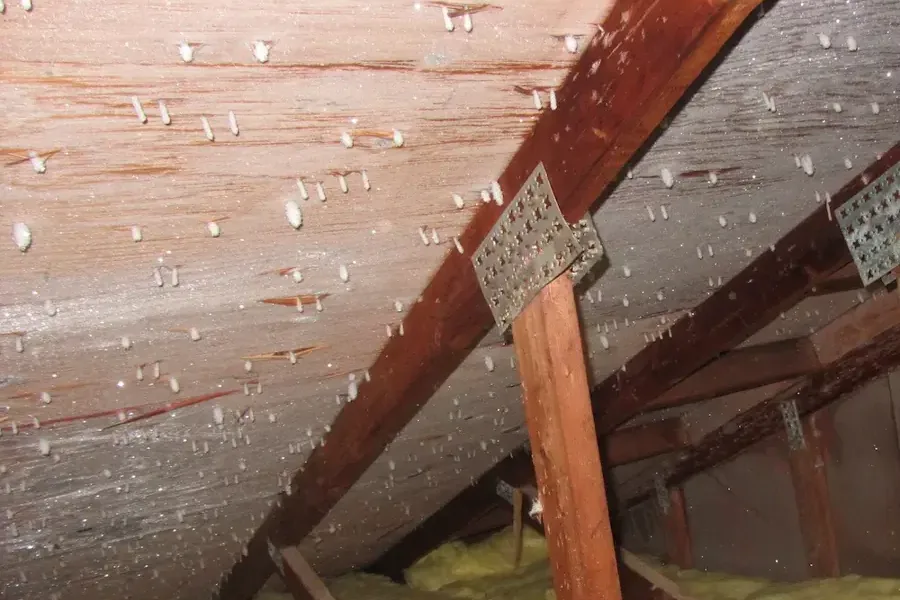
A ceiling mark can sit away from the roof opening, making attic observations and material readings essential for defining the full rain pathway. The downward route is mapped through insulation, framing and the finished room below.
(888) 621-2041Request Roof seepage help- Attic route checks
- Ceiling hazard control
- Overhead moisture records
Weather sourceRain through roof covering or flashing
Material routeDecking, framing, insulation and ceiling
Safety issueWet fixtures and weakened board
Drying evidenceMapped overhead readings
A mark on the ceiling rarely points straight to the roof opening above it. Rain can follow decking, cross a framing member, soak insulation and appear inside at a fixture or seam. Ellenton properties near the Manatee River, U.S. Route 301 and Interstate 75 need the same building specific tracing: technicians begin at the indoor symptom and connect it with accessible roof and attic observations.
How roof leak water damage is handled in Ellenton
- 1
Evaluate indoor hazards
The opening check addresses weakened board, wet fixtures and safe routes before attic access.
- 2
Trace the overhead pathway
Interior readings and accessible attic observations connect roof conditions with damp materials below.
- 3
Choose selective openings
Insulation, ceiling board and enclosed framing are exposed only where condition or measurements support access.
- 4
Verify source and drying
Final records connect roof correction with stable readings in every retained interior assembly. Interior documentation identifies the roof-side repair need separately from insulation, ceiling and wall recovery.
What does roof leak water damage cost in Ellenton, FL?
Roof leak restoration usually ranges from $900 to $6,800 or more. Attic access, wet insulation, ceiling stability and room spread shape the work. Attic access, insulation condition and spread across several ceiling sections can raise mitigation cost.
Localized roof entry
$900 to $2,850
- Interior stain mapping
- Attic material readings
- Focused ceiling drying
Several overhead layers
$2,850 to $4,800
- Insulation condition notes
- Framing moisture points
- Controlled board access
Extended rain pathway
$4,800 to $6,800+
- Multiple framing bays
- Several protected rooms
- Longer overhead monitoring
For a closer planning number, try the water damage cost calculator. A firm figure comes after the walkthrough and moisture map.
Indoor stability comes before source investigation
A room with sagging board, active dripping or a wet light should remain empty. Occupants should not puncture a bulge or stand beneath softened material. From outside the hazard area, photographs can record the stain and damaged belongings. The team checks nearby ceilings and walls, then evaluates accessible space above. Roof correction belongs to the appropriate trade, while restoration work addresses water already inside the assembly.
- Clear people and furniture from beneath softened ceiling board.
- Leave wet switches, lights and fans untouched.
- Photograph stains without standing below weakened material.
- Note whether the mark changed during recent rainfall.
- Keep attic entry closed until access is assessed.
The moisture map follows layers instead of stains
Where safe access exists, readings cover decking, framing, insulation and the ceiling surface. Wet insulation can hold water against wood even after dripping stops. A stable clean water affected material may remain if progress is measurable. Crumbling board, damaged insulation or an area that cannot be monitored may need a controlled opening. New weather entry must also be prevented before the drying result can last.
Air movement serves exposed damp surfaces, and dehumidification reduces vapor in the room. Technicians use consistent overhead points to determine whether each section is improving. A stubborn rafter bay may require different access rather than more time alone. The ceiling leak page addresses cases where plumbing or condensate above the room remains another possible source.
The visible stain marks an exit, not the entire route
Water can travel sideways before reaching the room. Attic and interior readings establish the true perimeter.
Repair plans rely on a traced sequence
The job file identifies observed roof conditions, interior marks, affected insulation, selective openings and final values. Owners near Palmetto or Memphis can coordinate roof correction and interior repair in the proper order without relying on appearance alone.
Wind and rain can enter at one roof detail yet surface several framing bays away. Across Ellenton, including properties toward Interstate 75 and the Manatee River, technicians treat the interior stain as a clue rather than the full boundary. Attic observations, safe meter access and room-side readings establish which overhead materials actually became wet.
Coverage
Roof Leak Water Damage across Ellenton, FL
The team responds across Ellenton, including properties near U.S. Route 301, the Manatee River and the Interstate 75 boundary. The adjoining communities of Palmetto and Memphis also have service information below.
See every area servedQuestions
Roof Leak Water Damage questions in Ellenton
Why can a roof opening appear away from the ceiling stain?
Rain may follow decking, rafters, fasteners or insulation before finding an indoor exit. The stain identifies one symptom. Readings above and around it establish the broader route and affected materials.
What should happen if ceiling board is sagging?
The room should remain empty. Occupants should not touch wet fixtures or stand beneath softened material. Technicians can control overhead access, document the condition and prepare for water and debris from a safer position.
Must the roof be repaired before interior drying starts?
Protective extraction and stabilization may begin while correction is arranged, but new entry must be stopped for drying to remain stable. The record should distinguish temporary weather protection, roof repair and interior restoration.
Can rain wet insulation remain in place?
Retention depends on contamination, physical condition, access and measured progress. Suitable insulation may stay when it responds. Compressed, contaminated or persistently wet material may require controlled removal so neighboring components can be evaluated.
How are attic materials monitored?
Technicians mark accessible decking, framing, insulation and ceiling points, then compare them with unaffected materials. Repeated measurements reveal whether each section is improving and whether equipment or access needs to change.
What determines roof leak restoration cost?
The affected layers, attic access, ceiling stability, wet insulation and spread into neighboring rooms shape the scope. A small accessible route differs from water crossing multiple framing bays and finished interior spaces. A roofing professional corrects the exterior opening, while the restoration scope addresses wet construction below. Even after rain stops, insulation and the back of ceiling board may remain damp. Recorded values across neighboring bays show whether the affected route has narrowed and reached its target.
24/7 emergency dispatch
Roof Leak Water Damage for Ellenton, available 24/7
A traced overhead route links weather correction, retained material drying and interior repairs through one clear record. Interior drying begins with a clearly documented overhead path.
(888) 621-2041Start Roof seepage care
Ellenton, FL · Find us on Google