Business water recovery
Commercial Water Damage in Ellenton, FL
Commercial losses need separate maps for moisture, hazards, customer routes, inventory and operating needs before equipment fills the building. Work zones are planned around safe access, contents and essential business functions.
(888) 621-2041Request Commercial help- Operational work sections
- Inventory condition records
- Room specific progress
Planning focusMoisture and business access
Work divisionSeparate operational zones
Assets consideredInventory, fixtures and records
Reporting methodRoom specific conditions and progress
A business water loss affects operations before the first machine is placed. Commercial properties along U.S. Route 301, near Interstate 75 and toward Palmetto can contain customer areas, storage, food service or offices under one roof. The restoration team maps moisture and normal traffic separately, then creates zones around hazards, inventory and required access. That plan lets managers understand why a room is restricted and what work remains there.
How commercial water damage is handled in Ellenton
- 1
Map moisture beside operations
The first survey records wet materials, hazards, traffic routes and business functions by room.
- 2
Extract around fixed property
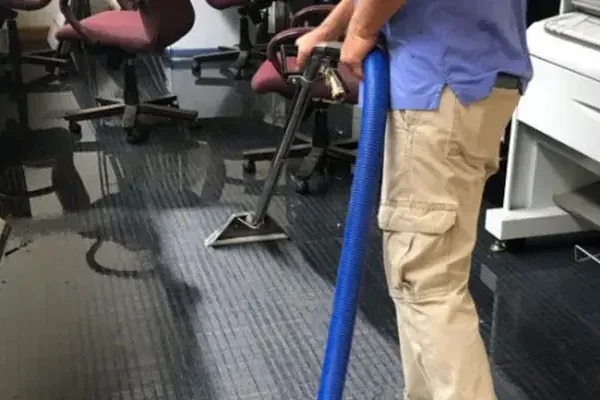
Suitable tools remove water from open floors, partitions, casework and accessible equipment edges.
- 3
Manage independent drying zones
Airflow and dehumidification follow material readings, access limits and occupancy needs for each section.
- 4
Issue room specific progress
Monitoring records show managers which areas remain controlled and which have reached completion. Each zone receives its own material readings, access notes and completion status within the shared incident file.
What does commercial water damage cost in Ellenton, FL?
Commercial restoration generally ranges from $2,500 to $18,000 or more. Area, category, materials, assets, access and operating limits determine scope. After-hours access, content handling and several work zones can expand the commercial scope.
One business section
$2,500 to $7,600
- Room condition photographs
- Staged water removal
- Protected employee route
Several operating areas
$7,600 to $12,750
- Inventory status records
- Partition moisture checks
- Section specific equipment
Complex commercial event
$12,750 to $18,000+
- Large controlled footprint
- Multiple access constraints
- Extended progress updates
For a closer planning number, try the water damage cost calculator. A firm figure comes after the walkthrough and moisture map.
The site contact establishes operating priorities
One representative identifies sensitive rooms, dry stock, utilities and activities that cannot continue near water. Technicians photograph the source area, fixtures and inventory before movement. Wet electrical zones and unstable overhead finishes are isolated. A clean access route may be preserved when the water category and layout allow. Contaminated losses need stricter separation, and the reason for that boundary appears in the written scope.
- Keep employees and customers beyond restricted wet zones.
- Move dry records only through protected access routes.
- Identify sensitive equipment before extraction setup.
- Photograph inventory condition before relocation decisions.
- Assign one contact for building access and updates.
Materials and operations shape each zone
Carpet tile, partitions, resilient flooring, casework and storage systems require different extraction and access. The crew clears open water before treating wall bases and fixed furnishings. Meter readings reveal whether moisture crossed tenant divisions or back room boundaries. Stable material may remain when it responds. Contamination or physical failure changes the removal plan, with debris routes protected from unaffected business areas.
Drying equipment is placed around egress, occupied rooms and service needs. Monitoring records list air and material values by zone, giving managers more useful information than sound or appearance. If one space finishes first, its equipment can be adjusted without assuming every room shares that result. The commercial water damage page for Parrish gives the broader service overview.
One building can follow several recovery schedules
A stockroom may remain controlled while a separate customer area reaches its drying goal and returns to repair planning.
Closeout supports coordinated business decisions
The final file connects source findings, access restrictions, inventory notes, extraction, material choices and ending values for each zone. Owners can share that organized sequence with insurers, property managers and repair contractors without mixing their separate roles.
Commercial properties around central U.S. Route 301 may combine public rooms, storage, offices and service areas under one roof. A release rarely affects each zone in the same way. The initial map records doorways, floor transitions, movable contents and operational priorities, allowing extraction and drying positions to follow the building without obscuring the loss record.
Coverage
Commercial Water Damage across Ellenton, FL
The team responds across Ellenton, including properties near U.S. Route 301, the Manatee River and the Interstate 75 boundary. The adjoining communities of Palmetto and Memphis also have service information below.
See every area servedQuestions
Commercial Water Damage questions in Ellenton
Can unaffected parts of a business remain in use?
That depends on category, hazards, egress and whether reliable separation can be maintained. The restoration map identifies controlled and unaffected zones. Owners and responsible authorities decide how operations proceed from those facts.
How is wet inventory documented?
Items are photographed before movement when conditions permit. Dry stock may relocate through a protected path. Wet goods are considered by material, contamination and physical condition, with cleaning or disposal decisions recorded separately.
Why does commercial drying need zones?
Large rooms, fixed casework, varied floor finishes, restricted spaces and ongoing operations create different moisture loads and access needs. Zones connect equipment, monitoring and restrictions to specific rooms rather than one building wide assumption.
How are neighboring spaces evaluated?
Technicians test shared walls, continuous flooring, utility penetrations and rooms beside the release. Measurements show whether water crossed a boundary. Property management can then coordinate access and documentation for each affected occupant.
What records belong in a commercial claim file?
Useful evidence includes source findings, room maps, photographs, inventory notes, category, extraction details, material decisions, equipment records and ending values. Each item should identify its zone so the sequence stays clear.
What determines commercial water damage cost?
The affected area, water category, materials, inventory, operating restrictions and access requirements shape the work. Several controlled zones with fixed assets require more coordination than one open room containing accessible clean water. The 2020 Census counted 4,129 Ellenton residents and 1,731 households, but local commercial spaces have their own occupancy and access demands. A useful plan identifies which rooms can operate, which require separation and how equipment routes remain clear during documented mitigation.
24/7 emergency dispatch
Commercial Water Damage for Ellenton, available 24/7
Section based records connect water removal, material drying, operational access and repair coordination for the property manager. Zone records make reopening decisions easier to assess later.
(888) 621-2041Start Commercial care
Ellenton, FL · Find us on Google