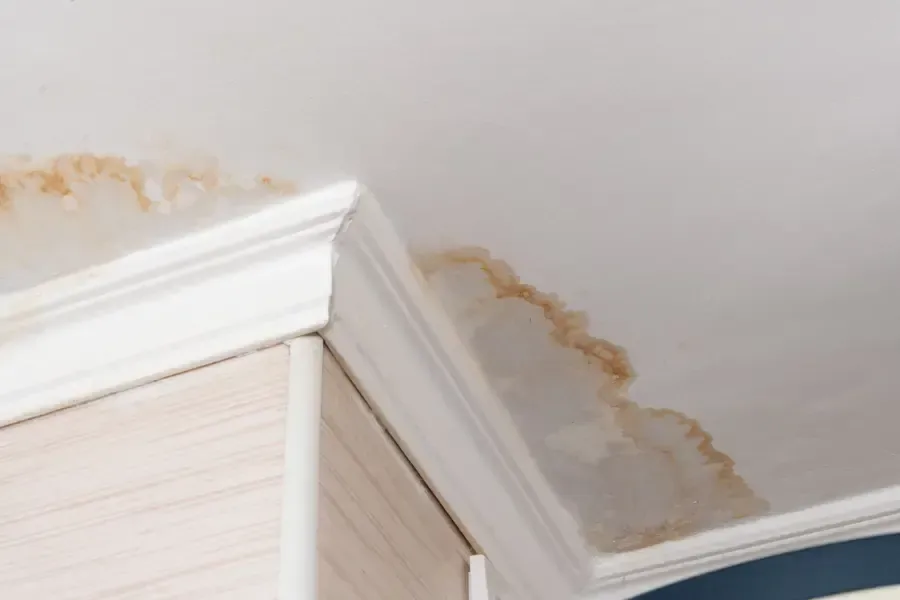
A ceiling mark can look simple while its source remains uncertain. Plumbing above the room, rain through the roof and air conditioning condensate can create similar discoloration. Ellenton properties along U.S. Route 301, near Interstate 75 and on the north side of the tidal Manatee River still need evidence from the actual room and cavity before a finish is opened or repaired.
Key takeaways
- Keep the floor below a sagging or wet ceiling clear.
- Use timing clues without treating them as proof of the source.
- Test the ceiling face and the accessible space above it.
- Remove only material whose condition or access need supports removal.
- Document the confirmed source separately from interior drying.
Begin with overhead safety
Softened ceiling board can lose strength, and moisture around a light fixture creates an electrical concern. Occupants should not stand beneath a bulge, press the stain or switch a wet fixture.
A photo from a safe doorway preserves the mark without disturbing it.
The responding crew asks when the symptom appeared and whether it changed with rainfall, plumbing use or cooling operation. Those answers narrow the possible sources, but ceiling leak restoration still relies on direct inspection and material readings.
- Clear people and belongings from below.
- Leave a wet fixture switched off.
- Do not puncture swollen ceiling material.
- Record when dripping or color changed.
Compare three common source patterns
A plumbing release often relates to fixture use or a supply failure above. Roof entry may change during rain, while condensate can follow cooling cycles. Each clue has limits because stored water can continue moving after the original event stops.
The inspection follows the stain into accessible ceiling cavities and neighboring framing bays. Technicians look for a pipe leak, roof entry or condensate route above the affected room.
Photos and moisture readings connect that source to the wet ceiling and help coordinate plumbing, roofing or mechanical repairs.
- Note fixture activity above the room.
- Record whether rain changes the mark.
- Observe whether cooling operation relates to dripping.
- Keep conclusions tied to inspected evidence.
Map the stain beyond its visible edge
Discoloration may cover less area than the damp back of the drywall. Thermal patterns identify possible differences, and a direct meter confirms which sections hold moisture. Testing moves outward until dry comparison points surround the affected plane.
The cavity above matters too. Insulation can retain water after the painted surface begins to look lighter.
A controlled opening may be required when material is unstable or blocks reliable access, but the size and location should follow evidence rather than the stain shape alone.
- Mark center and perimeter readings.
- Check the space above when access is safe.
- Compare insulation and framing condition.
- Photograph every controlled opening.
Decide what can dry in place
Sound ceiling board exposed to suitable water may remain when access and progress readings support drying. Saturated insulation, failed drywall or contaminated porous material needs a different decision. The water category and structural condition matter as much as moisture content.
The roof leak service addresses rain entry, while cooling contractors handle air handler faults and plumbers correct pipe problems. Restoration documentation names that separate source scope and then follows the interior materials through recovery.
- Retain stable material only with useful readings.
- Remove failed insulation under controlled conditions.
- Protect the room from falling debris.
- List every source trade separately.
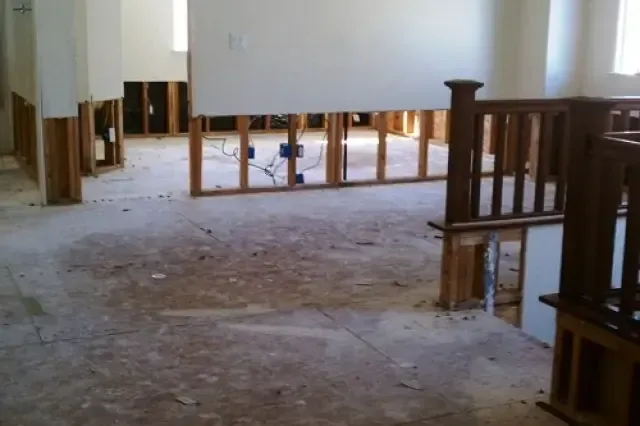
Dry an overhead assembly with measured control
After available water and failed materials leave, airflow targets exposed damp surfaces. Dehumidification manages vapor released into the room. Equipment should not blow blindly against a closed wet cavity because the trapped layer may remain unreachable.
Marked readings show whether framing, ceiling board and wall tops are changing. If one edge stalls, access or placement can be adjusted. The structural drying page describes how material values and indoor conditions work together during that process.
Close the investigation before cosmetic repair
Paint can hide a mark without resolving the material condition behind it. Before repair, the file should identify the confirmed source, first moisture boundary, access points, retained layers, removed finishes and ending comparisons.
Before a ceiling is patched, the contractor needs the locations of wet framing, removed insulation and retained board. Ending readings should accompany those notes.
With that record in hand, repairs can cover the inspected area after the source is corrected and the retained layers have dried.
- Confirm source correction before closing access.
- Keep initial and final photographs together.
- Record values at the same marked points.
- Describe the ceiling area prepared for repair.
Use the symptom timeline to support future maintenance
The finished incident record can do more than close one repair. A timeline showing rain, fixture use, cooling operation and stain changes helps the property owner explain the event to the appropriate trade.
It also prevents an unrelated old mark from being confused with new water later.
After reconstruction, occupants can keep the source photographs and ceiling diagram with property records. If a mark returns, the prior location, correction and dry endpoint offer a useful comparison.
A new photograph from the same viewpoint helps the next technician locate the change and plan inspection above it.
Routine observation should remain simple. Changes in paint color, soft texture, dripping or fixture behavior merit attention, while repeatedly touching or opening the ceiling can worsen damage. The safest response is to protect the room and arrange inspection before cosmetic work.
The record can also identify areas that tested dry. That information matters because a repair contractor should not assume every ceiling section in the room was affected.
Clear outer points keep demolition tied to evidence. If access above the ceiling was limited, the file should say so and explain which room-side measurements supported the ending decision.
Limits stated plainly are more useful than an unexplained conclusion.
- Save the source and completion photographs together.
- Keep the marked ceiling diagram with repair records.
- Note whether a future symptom follows rain or equipment use.
- Treat every new wet electrical symptom as a safety concern.