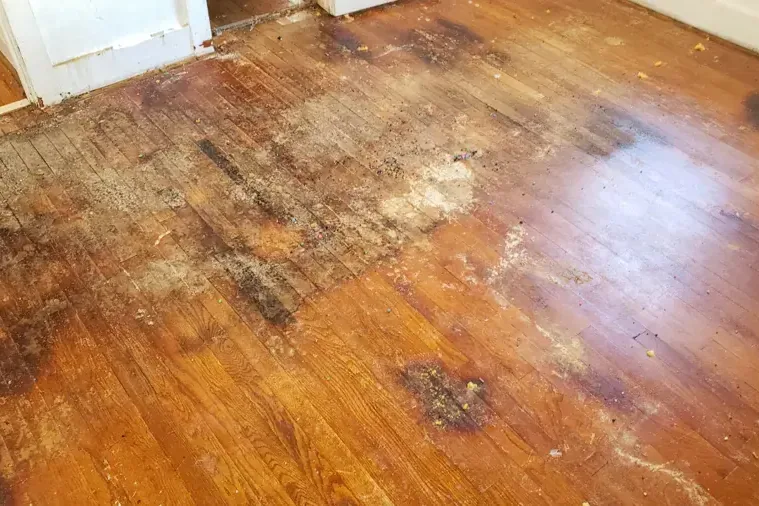
A wood floor can look dry on top while moisture remains near fasteners or within the supporting layer. Lakewood Ranch includes townhomes, attached villas, condominiums and several forms of single-family housing. That variety makes a measured board field more reliable than any assumption about neighborhood construction.
Key takeaways
- Extract water from board faces and accessible seams first.
- Do not aim household heaters at a wet floor.
- Compare affected boards with suitable dry wood.
- Check the subfloor where construction and access allow.
- Delay finish repair until moisture conditions stabilize.
Start with the water source and category
A dishwasher release, supply pipe failure and outside water can wet identical boards but create different cleanup conditions. Source correction, category and contact history come before decisions about retention or removal.
Residents should avoid wet electrical components, move loose dry rugs when safe and photograph the board field. They should not pry raised edges. The hardwood water damage service begins with surface extraction and a material map.
- Stop an accessible indoor source safely.
- Photograph seams and room transitions.
- Keep household heat away from boards.
- Report any water in rooms below.
Build a reading grid across the floor
Technicians mark points from the wet center through the outer edge and into a suitable unaffected area. Board direction, wall contacts and thresholds enter the diagram. Repeating those exact locations later shows movement that a single reading cannot provide.
Cupping, dark seams and finish changes are valuable observations, yet appearance does not measure the underside. A floor in Waterside may be installed differently from one in Summerfield or Palm Grove, so the grid reflects the property rather than the village name.
- Mark affected and comparison boards.
- Follow the board direction through doorways.
- Record visible edge changes separately.
- Use consistent meter settings for comparisons.
Why the subfloor matters
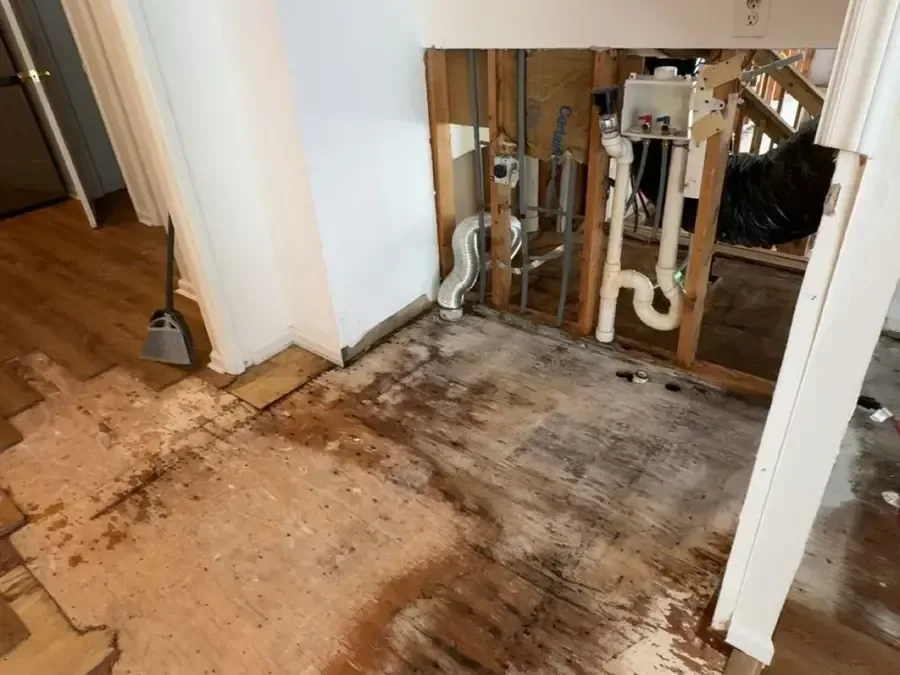
Water can remain between boards and supporting material after the face dries. Where access is available, technicians test the subfloor or lower assembly. That extra layer helps explain why one section changes slowly or why a room below shows staining.
Access should remain controlled. Removing boards simply to inspect is not automatic. Condition, water category and meter trends determine whether a limited opening is justified. Every removed component is photographed in place first.
- Check below only through safe access.
- Compare upper and lower layers.
- Document fastener and seam conditions.
- Support removal with material evidence.
Control airflow instead of forcing heat
Surface and detail extraction reduce removable water. Air movers then deliver controlled movement across the board field, while dehumidifiers collect vapor. Aggressive household heat can create uneven change between the face and lower layer.
The structural drying service balances material readings with indoor conditions. Equipment positions may change as one edge reaches its goal and another remains elevated. The process follows the grid rather than a preset schedule.
- Extract before evaporation begins.
- Direct air across accessible board surfaces.
- Manage vapor with dehumidification.
- Adjust positions when readings stall.
Interpret cupping and finish change carefully
Cupping indicates a moisture imbalance, but it does not alone decide whether the floor can remain. Species, installation, finish condition, category and measured response all matter. A flooring professional evaluates sanding or board repair after moisture stabilizes.
In a Waterside home or a Summerfield property, the decision follows the floor itself: board shape, finish condition, subfloor readings and the response to drying. Technicians record areas that recover alongside boards with lasting damage.
That record lets the flooring contractor plan repairs after the moisture levels settle.
Close the drying phase before floor repair
The final report identifies the source, initial board field, extraction, subfloor access, equipment changes and ending comparisons. Photographs pair visible condition with the measurement dates.
A floor specialist can use that history to evaluate finish repair, selective board replacement or retention. The appliance leak page adds cabinet and machine context when the original release began in a kitchen or laundry area.
- Keep the full reading grid with the report.
- Identify every dry comparison point.
- List boards or trim removed for access.
- Separate drying completion from finish repair.
Separate drying success from the final appearance
A floor can reach an acceptable moisture condition and still show cosmetic change. Water marks, finish clouding, edge lift or small gaps may remain after the building material no longer needs active drying.
Those observations move into the flooring repair phase rather than extending equipment without evidence.
The opposite is also possible. A board face can look normal while lower readings remain elevated. Removing machines because the color improved would ignore the supporting layer. The meter grid prevents appearance from controlling a technical endpoint in either direction.
Before sanding or coating, the flooring professional should receive the source history, water category, reading grid and subfloor notes. That person can evaluate finish compatibility and board condition after the moisture relationship stabilizes.
Restoration documentation supports the decision but does not prescribe a cosmetic treatment.
Thresholds need special attention because they may connect different installation systems. A board field in one room can finish drying while the transition or next space remains elevated. Separate labels preserve those boundaries and prevent one average reading from representing several materials.
Contents and rugs return only after the floor is ready. Their original locations should be visible in the early photographs, especially when they concealed a wet edge or slowed evaporation. A staged return protects the marked field until final verification is complete.
Water category should remain attached to the flooring record even after values improve. A clean indoor supply release and outside water can leave similar visible marks while requiring different material decisions.
If any board was removed, its original location and reason belong on the diagram. This keeps later cosmetic discussion from erasing the sanitation and access basis for the earlier work.
Final photographs should include thresholds and dry reference boards, giving the flooring specialist both the affected field and its local comparison.
- Distinguish moisture completion from cosmetic repair.
- Give the flooring specialist the full reading history.
- Keep thresholds as separate measurement zones.
- Delay rugs until the documented endpoint is reached.
- Preserve condition photographs before sanding or replacement.