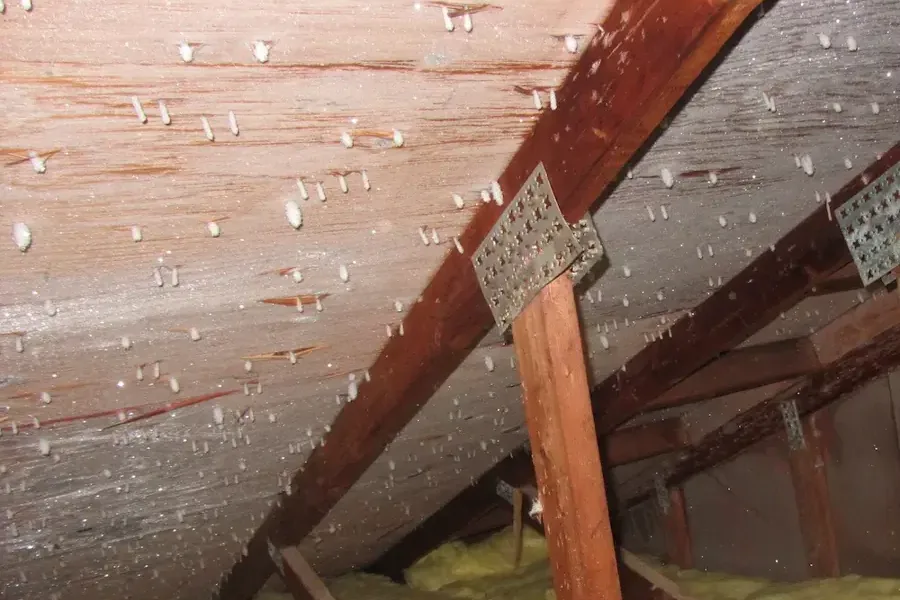
June through September bring the heaviest average monthly rainfall in Parrish according to NOAA climate normals. When water crosses a roof opening, the stain inside may appear far from the entry point. A useful response separates exterior correction from the inspection, extraction and drying needed beneath the roof. That distinction protects ceilings and walls from being closed while hidden layers are still damp.
Key takeaways
- Keep people away from sagging ceilings and wet electrical fixtures.
- Photograph the room symptoms and the accessible roof area before conditions change.
- Roof repair stops new entry, while interior restoration addresses retained water.
- Meter readings across several framing bays define the true affected boundary.
- Final values should support repair of insulation, ceiling board and wall finishes.
Why a ceiling stain can sit away from the roof opening
Rain can enter around damaged roof details and move along decking, framing or insulation before reaching a finished ceiling. The first brown mark is often where water exits into the room.
During Parrish summer rain, technicians follow that mark upward and across adjacent framing bays to locate the wet layers and coordinate roof correction.
The safest early action is to clear the room below a soft, bowed or actively dripping area. Occupants should avoid a wet light fixture and should not puncture a ceiling bulge.
From a dry position, photographs can record the shape, color and changing edge while the roof leak response is arranged.
- Move people and pets away from the area below.
- Leave wet switches and fixtures untouched.
- Record whether the stain changes during rain.
- Protect dry belongings that can be reached safely.
Exterior correction and interior drying are separate jobs
A roofing professional finds and corrects the opening in shingles, flashing or another exterior component. That repair is essential, but it does not remove moisture already held by insulation, ceiling board or framing.
Restoration technicians inspect the layers below and document the water path before choosing access or equipment.
The sequence matters during the local wet season. Another period of rain can obscure whether a new drip comes from unfinished roof work or retained water moving through construction.
Source photographs, timing notes and marked meter points give both trades a common factual record without mixing their responsibilities.
- Roof findings and repair belong in the exterior record.
- Interior readings establish which materials received water.
- Wet insulation receives a condition and retention decision.
- Separate completion notes prevent an incomplete scope from appearing finished.
How technicians trace water through an attic assembly
Safe attic access can reveal damp decking, compressed insulation, discolored framing and the upper face of ceiling material. Thermal patterns help locate possible differences, but direct meter readings confirm moisture.
The survey continues into neighboring framing bays until suitable dry comparison points surround the affected section.
Access is never created simply because a stain looks large. A controlled opening is supported by condition, readings and the need to remove failed material or reach trapped insulation.
The structural drying process then directs airflow toward exposed surfaces while dehumidification collects vapor released into the work area.
- Map the ceiling face before opening finishes.
- Inspect the accessible space above the mark.
- Compare damp framing with a dry reference.
- Record every opening and removed material.
What can remain and what may need removal
Stable framing can often remain when it is accessible and responds to drying. Ceiling board that has lost strength, insulation holding water or a finish contacted by contaminated outside water needs a different evaluation.
The decision rests on source, material condition and the ability to verify recovery.
Outdoor water can carry soil and debris, so category also affects protective procedures and material handling. A clean appearance does not make outside water equivalent to a fresh indoor supply release.
The restoration file should explain why each porous layer stayed, was opened or was removed.
- Retain sound materials only when readings show progress.
- Remove failed porous layers with controlled access.
- Keep outside-water handling within the defined work area.
- Photograph the exposed assembly before drying begins.
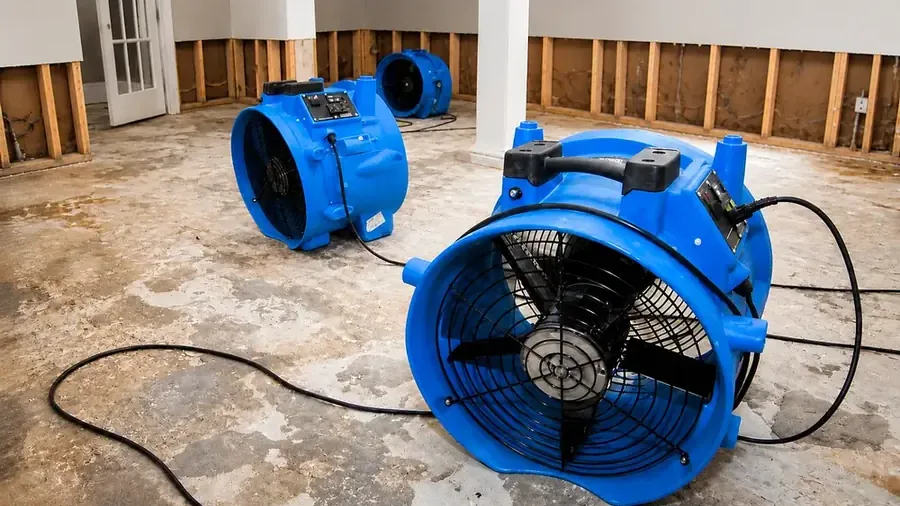
Drying the room beneath a repaired roof
Extraction addresses any water that collected on flooring or contents first. Air movers then target exposed damp surfaces instead of blowing blindly into a closed ceiling.
Dehumidifiers reduce vapor in the chamber, and technicians return to the marked ceiling, framing and wall points to compare change.
The drying time estimator can show which factors influence planning, but it cannot replace field values. Dense wood, enclosed insulation and limited access may change at different rates.
Equipment moves or leaves according to those material readings, not the day shown on a calendar.
The closeout record before ceiling repair
A complete file includes the reported rain timing, source photographs, first moisture map, controlled openings, removed materials and ending comparisons. It should also identify any roof work that remains outside the restoration scope.
Those details give the reconstruction contractor a defined area to repair.
Before ceiling repair begins, the report should connect the exterior opening with the wet insulation, framing and board below. Photos taken during access show which layers were removed.
Final readings at the retained materials give the repair contractor a clear starting point for closing the ceiling.
- Confirm the roof opening has been corrected.
- Compare final values with suitable dry material.
- List insulation and ceiling sections removed.
- Preserve photographs for the property record.
Questions to settle before the next period of rain
The exterior contractor and restoration crew should agree on what has been corrected and what still needs observation. A temporary exterior measure may reduce entry without representing a finished repair. Interior equipment can continue working while that distinction remains clearly documented.
Occupants can help by reporting any new drip, expanding stain or change in odor without entering the controlled area. A fresh symptom should be photographed from the same safe viewpoint when possible.
That comparison can distinguish new entry from water already moving through a damp layer.
- Confirm whether the exterior correction is temporary or complete.
- Keep ceiling access open until ending values are documented.
- Report any symptom that changes during later rain.
- Do not repaint while overhead materials remain under evaluation.